

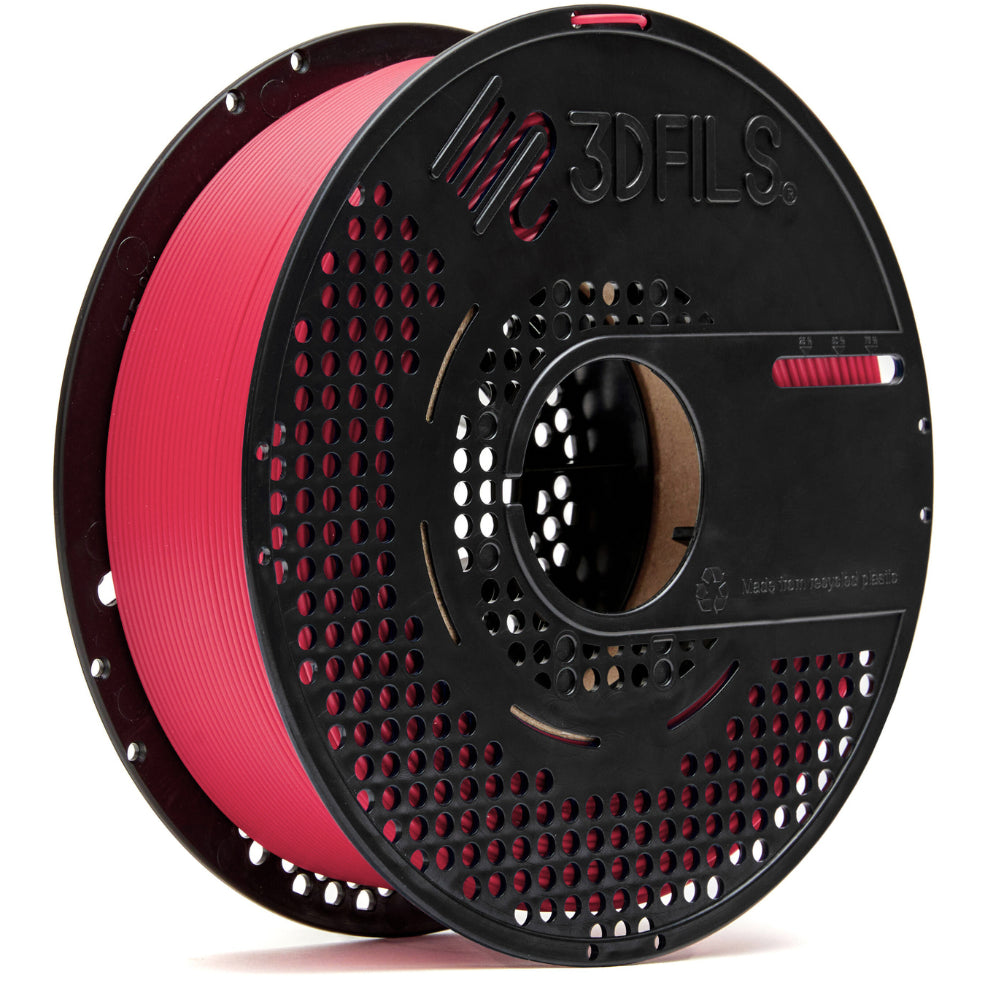
ASA filament is the technical material of choice for parts exposed to outdoor conditions: high UV resistance, weather stability, and better performance than ABS in sunlight. Manufactured in Spain, with real stock and shipping within 24-48 hours. Available in 1.75 mm.

Sold Out
Resistencia UV
Resistencia UV

Resistente a los rayos UV

Resistencia térmica
Resistencia térmica

Mejor que el PLA

Enrollado perfecto
Enrollado perfecto

Olvídate de atascos

AMS
AMS

Compatible con AMS

SaleSold Out

esFil ASA MAX White

Sale price€12,71 EURRegular price €16,94 EUR
Resistencia UV
Resistencia UV

Resistente a los rayos UV

Resistencia térmica
Resistencia térmica

Mejor que el PLA

Enrollado perfecto
Enrollado perfecto

Olvídate de atascos

AMS
AMS

Compatible con AMS

SaleSold Out

esFil ASA MAX White

Sale price€13,55 EURRegular price €16,94 EUR
Resistencia UV
Resistencia UV

Resistente a los rayos UV

Resistencia térmica
Resistencia térmica

Mejor que el PLA

Enrollado perfecto
Enrollado perfecto

Olvídate de atascos

AMS
AMS

Compatible con AMS

SaleSold Out

esFil ASA MAX White

Sale price€13,55 EURRegular price €16,94 EUR
Resistencia UV
Resistencia UV

Resistente a los rayos UV

Resistencia térmica
Resistencia térmica

Mejor que el PLA

Enrollado perfecto
Enrollado perfecto

Olvídate de atascos

AMS
AMS

Compatible con AMS

SaleSold Out

esFil ASA MAX White

Sale price€13,55 EURRegular price €16,94 EUR
Resistencia UV
Resistencia UV

Resistente a los rayos UV

Resistencia térmica
Resistencia térmica

Mejor que el PLA

Enrollado perfecto
Enrollado perfecto

Olvídate de atascos

AMS
AMS

Compatible con AMS

Printing parameters

Print temperature

240-260 °C (recommended 250 °C)

Hot Bed

90-110 °C (100 °C recommended)

image/svg+xml

Print speed

40-80 mm/s (recommended 50 mm/s)

🛡️ ASA 1.75mm Filament for 3D Printing – UV Resistance and Outdoor Durability

The ASA 1.75mm filament (Acrylonitrile Styrene Acrylate) is an ideal technical material for 3D printing of parts exposed to the outdoors. Its excellent UV, weather, and chemical resistance make it the best alternative to ABS for durable outdoor applications.

✅ Why choose ASA?

  • High weather resistance: Will not discolor or degrade with sun or water exposure.
  • Durable and stable: Maintains its mechanical properties under extreme conditions.
  • Professional finish: Excellent surface quality, ideal for end pieces.
  • Ideal for outdoors: From brackets and housings to signage and automotive parts.

🌞 ASA vs. Other filaments

  • PLA: More environmentally friendly and easier to print, but less weather-resistant.
  • ABS: Similar in properties, but ASA offers better UV resistance and less warping.
  • PETG: Good chemical resistance, but lower thermal and solar radiation stability.

🔧 ASA filament applications

  • Components exposed to sun and rain
  • Vehicle casings and exterior parts
  • Supports, signage, street furniture
  • Weather-resistant functional prototypes

🧪 ASA filament advantages

  • High UV and chemical resistance
  • Stability dimensional
  • Excellent mechanical durability
  • Ideal for prolonged outdoor use

⚠️ Disadvantages of ASA filament

  • More difficult to print than PLA (closed printer recommended)
  • Emits fumes: requires good ventilation

🔧 Printing recommendations for ASA

  • Nozzle: 0.4 mm or larger
  • Print temperature: 240-260°C
  • Heated bed: 90-110°C
  • Print speed: 40-60 mm/s
  • Closed chamber or draft shield

📊 Filament properties ASA

  • Density: ~1.07 g/cm³
  • Tensile strength: 45-50 MPa
  • Flexural strength: ~65 MPa
  • Modulus of elasticity: ~2 GPa
  • Softening temperature: 95-105°C
  • Elongation at break: ~20%
  • UV Resistance: High

Frequently Asked Questions

Find more information on our FAQ page

What is ASA filament?

ASA stands for Acrylonitrile Styrene Acrylate, a thermoplastic considered the natural successor to ABS. It is an engineering material with very similar mechanical properties to ABS but with two critical differences: high UV resistance and much better weather stability. ASA filament also exhibits good chemical resistance to oils and aliphatic solvents, an operating temperature of up to 96-105 °C, and excellent dimensional stability. It is ideal for functional parts and allows for professional finishes through sanding, painting, or smoothing with acetone vapors.

Which is better, ABS or ASA?

For outdoor parts, ASA is always better than ABS. It maintains its color and mechanical properties when exposed to UV radiation, moisture, and temperature changes, whereas ABS tends to yellow, crack, and become brittle over time in the sun. ASA also prints better: less warping, fewer odors, and greater dimensional stability. ABS is still a valid option indoors and is often slightly cheaper, but generally speaking, ASA wins on almost all fronts except price. If the part will be outdoors or exposed to UV rays, there's no doubt: choose ASA.

Can ASA filament withstand outdoor conditions and UV rays?
Yes, we can repair your computer remotely. To do this, you must have an Internet connection and a phone line.

Do you have any further questions?

Don't hesitate to contact us